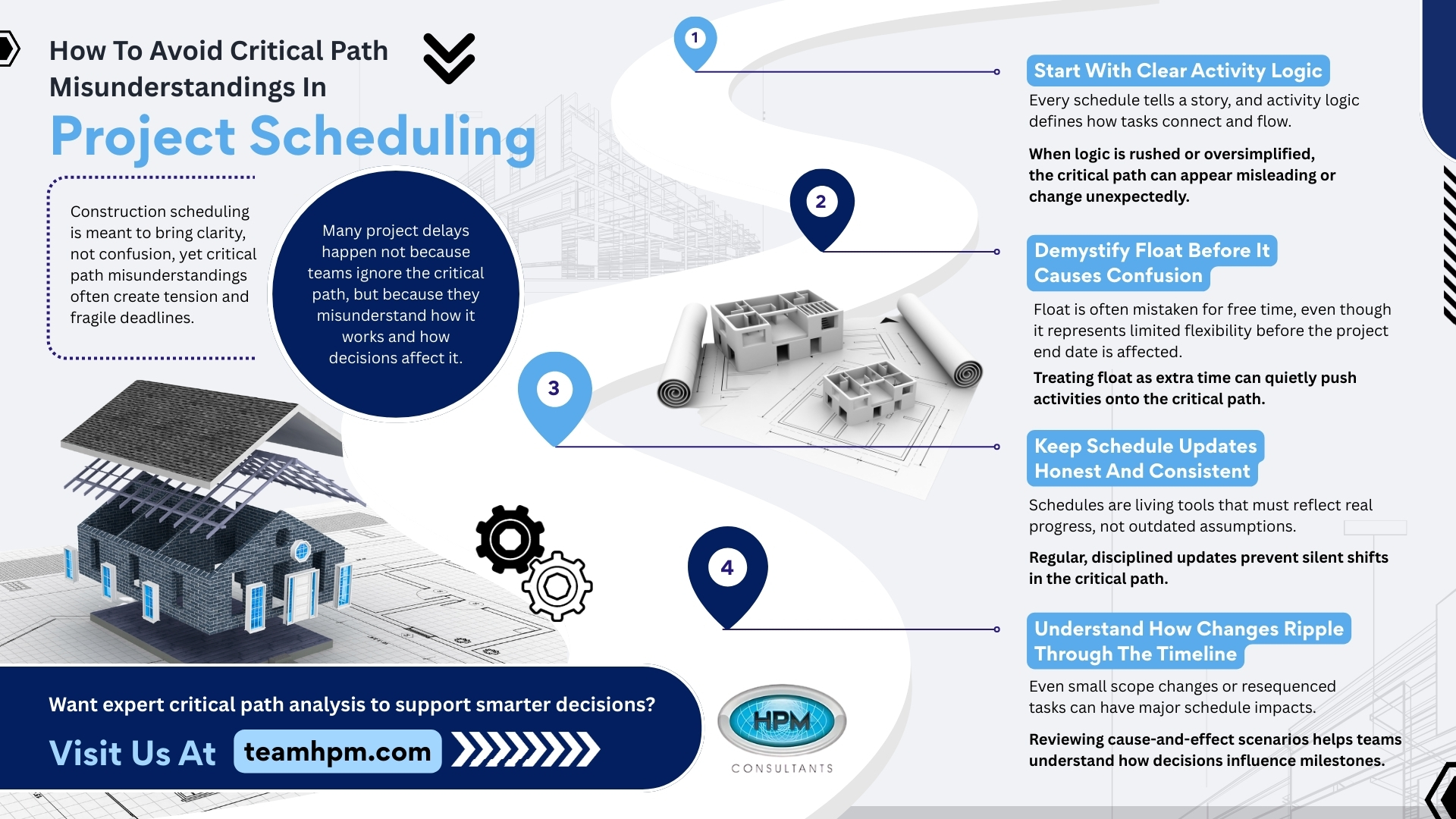


Project schedules are meant to create clarity, but misunderstandings around the critical path often lead to delays and unnecessary pressure. Many project issues arise not from ignoring the critical path, but from misunderstanding how it works and how decisions impact it.
Key Points to Remember:
Start with Clear Activity Logic
A schedule should clearly show how activities connect and flow. Rushed or oversimplified logic can cause the critical path to shift unexpectedly or appear misleading.Demystify Float Before It Causes Confusion
Float is often mistaken as free time, but it actually represents limited flexibility. Misusing float can unintentionally push activities onto the critical path.Keep Schedule Updates Honest and Consistent
Schedules should reflect real progress, not outdated assumptions. Regular, disciplined updates help prevent silent changes to the critical path.Understand How Changes Ripple Through the Timeline
Even small scope changes or resequencing of tasks can significantly impact the overall schedule. Reviewing cause-and-effect scenarios helps teams make informed decisions.
Accurate critical path analysis supports smarter project decisions, reduces risk, and strengthens schedule reliability.