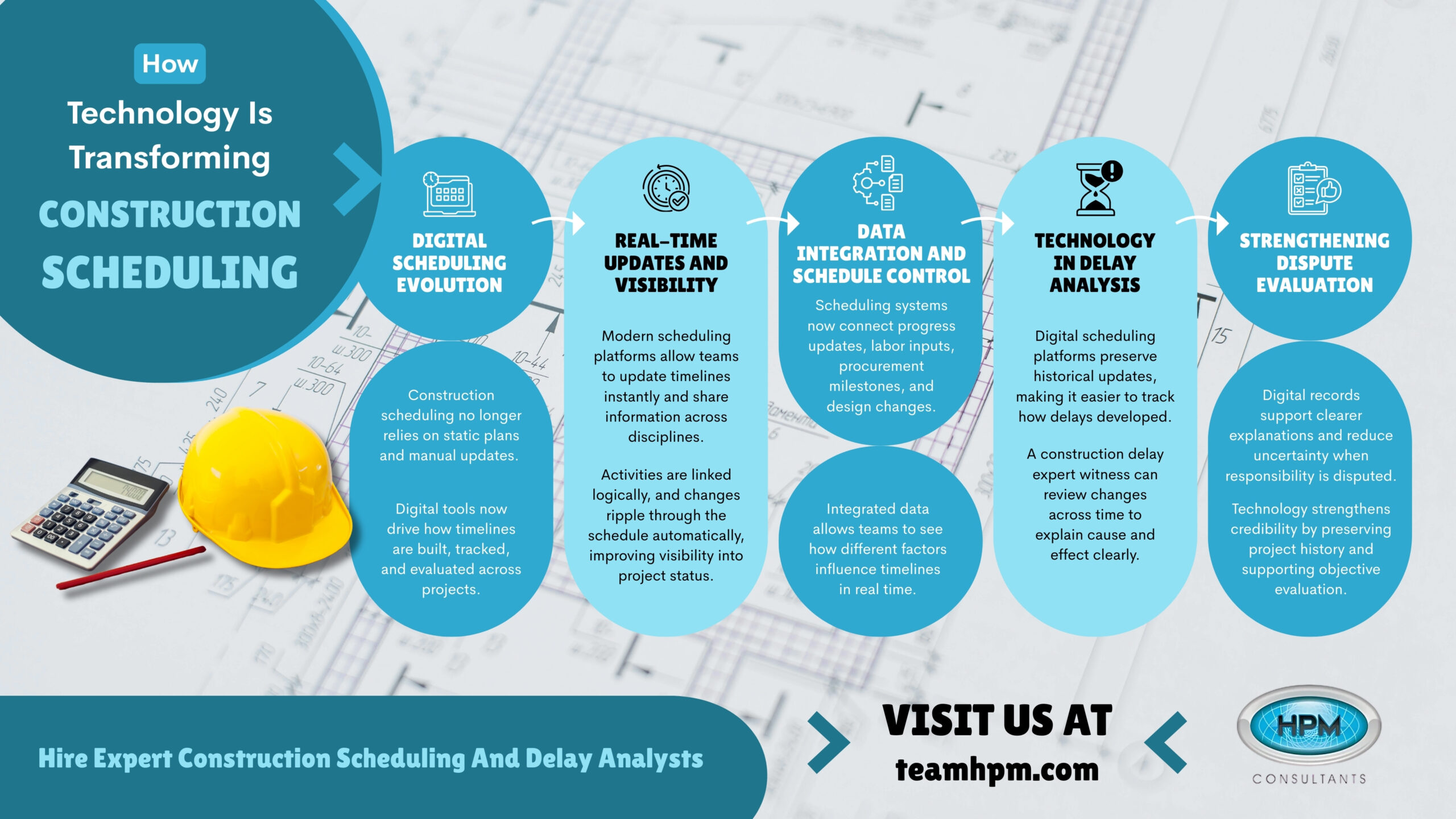


Technology is reshaping the way construction projects are planned, managed, and delivered. Traditional scheduling methods that relied on static plans and manual updates are rapidly being replaced by advanced digital tools that offer greater efficiency, accuracy, and transparency.
Digital Scheduling Evolution
Construction scheduling has moved beyond spreadsheets and paper-based timelines. Modern digital platforms now enable teams to build, track, and evaluate schedules with precision. These tools streamline processes and allow for better coordination across all stages of a project.
Real-Time Updates and Visibility
One of the biggest advantages of technology is real-time data sharing. Teams can instantly update timelines, track progress, and communicate changes across multiple disciplines. This ensures everyone stays aligned, while automated adjustments improve overall project visibility and reduce delays.
Data Integration and Schedule Control
Today’s scheduling systems integrate various data sources, including labor inputs, procurement updates, milestones, and design changes. This connected approach allows project managers to understand how different factors impact timelines and make informed decisions quickly.
Technology in Delay Analysis
Digital tools also play a crucial role in analyzing project delays. By preserving historical data, these platforms make it easier to track when and how delays occurred. Experts can review timelines and identify cause-and-effect relationships with greater clarity and accuracy.
Strengthening Dispute Evaluation
Accurate digital records help reduce uncertainty in construction disputes. Clear documentation supports objective analysis and strengthens credibility when determining responsibility. This leads to more transparent and fair dispute resolution processes.
Conclusion
The integration of technology into construction scheduling is not just an upgrade—it’s a transformation. With improved visibility, smarter data integration, and enhanced analytical capabilities, technology is helping construction professionals deliver projects more efficiently, minimize risks, and achieve better outcomes.