

Construction disputes can quickly escalate when project delays, cost overruns, or performance issues arise. Achieving a fair resolution requires a structured approach built on facts, analysis, and expert insight. By following a clear process, project stakeholders can identify the true causes of disputes, assess their impact, and reach informed decisions that protect their interests.
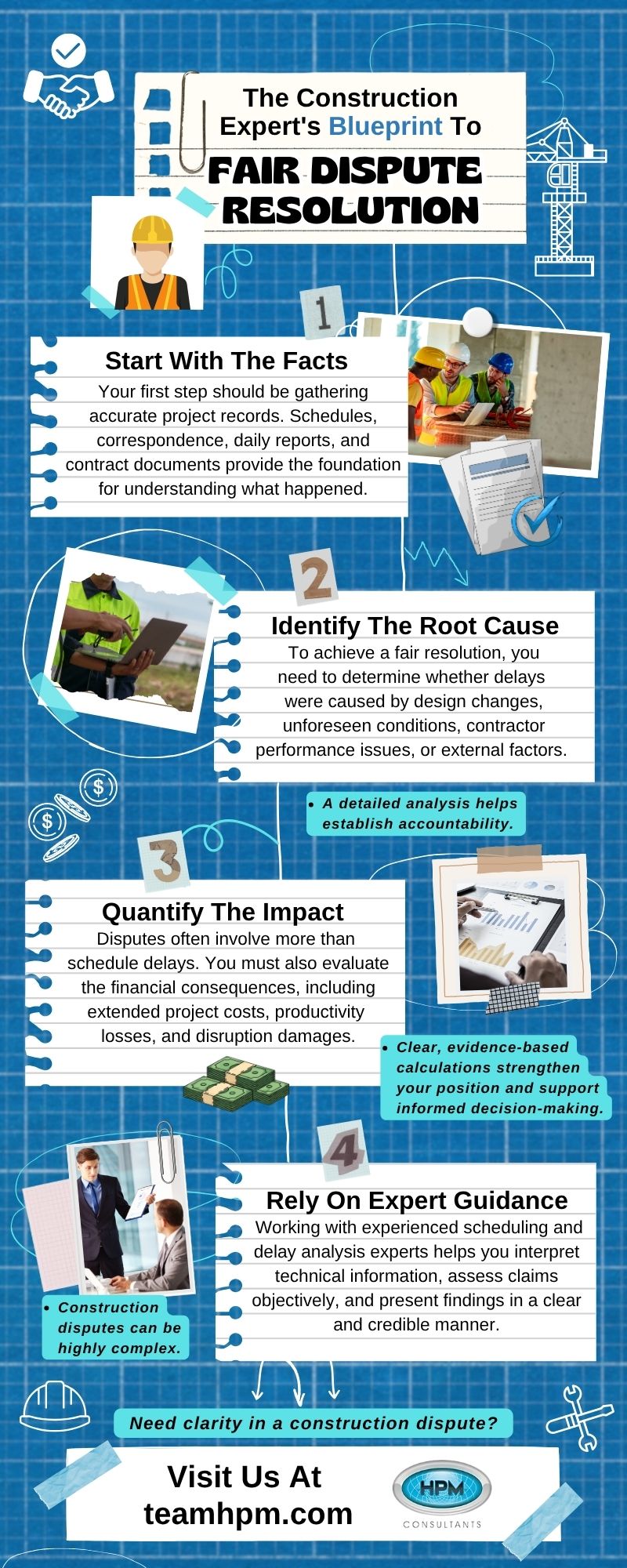
1. Start with the Facts
The foundation of any dispute resolution process is accurate documentation. Project schedules, daily reports, correspondence, contracts, change orders, and meeting records provide a clear picture of what occurred throughout the project. Gathering and reviewing these documents helps establish an objective understanding of the events that led to the dispute.
2. Identify the Root Cause
A fair resolution depends on determining why the issue occurred. Delays and disruptions may result from design changes, unforeseen site conditions, contractor performance challenges, weather events, or other external factors. Conducting a detailed analysis helps assign responsibility appropriately and creates accountability among all parties involved.
3. Quantify the Impact
Construction disputes often involve more than schedule delays. Financial impacts such as increased labor costs, extended project overhead, productivity losses, and disruption damages must also be evaluated. Accurate, evidence-based calculations strengthen claims, support negotiations, and provide decision-makers with reliable information.
4. Rely on Expert Guidance
Construction disputes can be highly complex and require specialized expertise. Experienced scheduling and delay analysis professionals can objectively evaluate project data, interpret technical information, and present findings in a clear and credible manner. Their expertise helps stakeholders navigate disputes efficiently and pursue fair outcomes.
Conclusion
Successful dispute resolution is built on thorough documentation, root cause analysis, impact assessment, and professional expertise. By following these steps, construction teams can resolve conflicts more effectively, minimize financial risks, and support fair, fact-based decisions that keep projects moving forward.