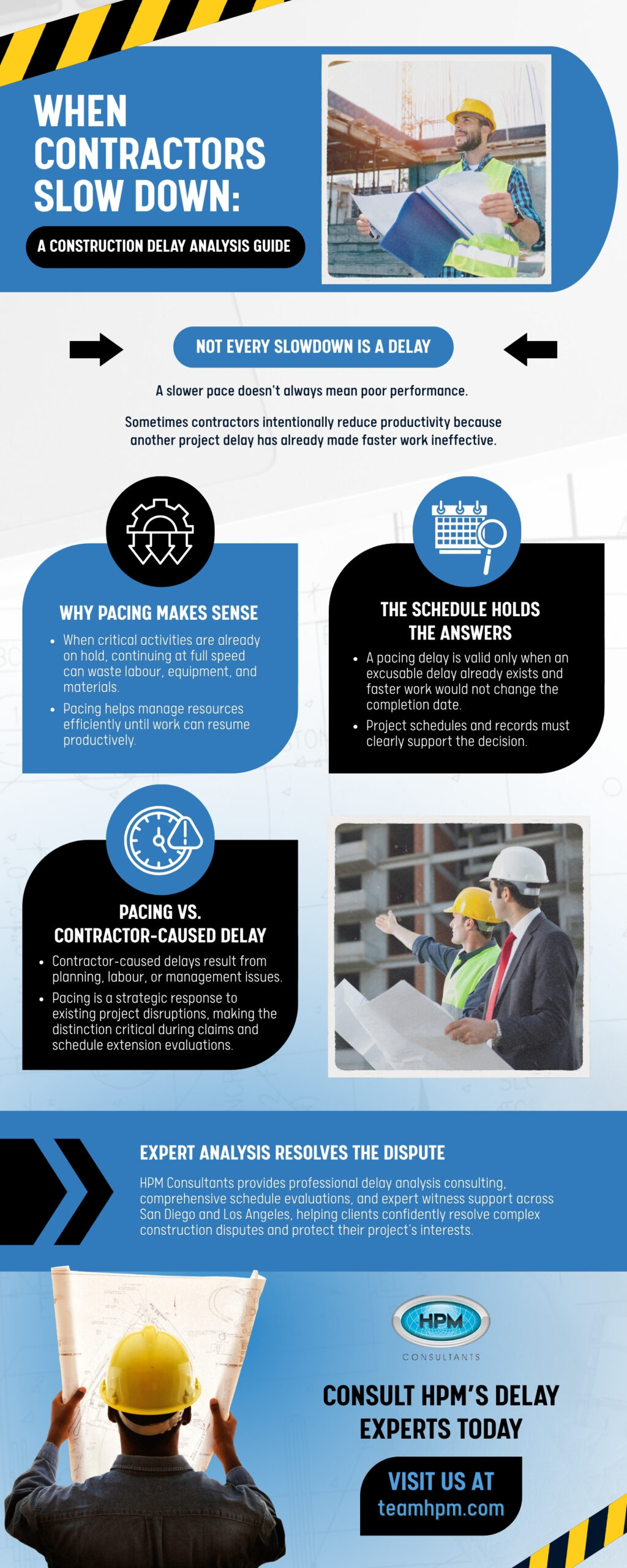


In construction, a slower pace on-site doesn’t always indicate poor performance or contractor inefficiency. In many cases, contractors intentionally reduce productivity because an existing project delay has already made accelerated work ineffective. This strategic approach, known as pacing, helps avoid unnecessary costs while aligning work with the project’s actual progress.
Not Every Slowdown Is a Delay
A slowdown should not automatically be classified as a contractor-caused delay. When critical activities are already delayed due to external factors, maintaining full production may waste labour, equipment, and materials without improving the project’s completion date. Proper delay analysis helps determine whether reduced productivity is a reasonable response to project conditions.
Why Pacing Makes Sense
Pacing allows contractors to manage resources efficiently when work cannot progress as originally planned. Instead of expending additional time and money on activities that cannot move forward, contractors can temporarily reduce operations until critical work resumes. This approach minimizes unnecessary expenses while maintaining project efficiency.
The Project Schedule Tells the Real Story
A valid pacing delay exists only when an excusable delay has already impacted the project schedule and increasing productivity would not change the final completion date. Accurate project schedules, progress reports, and documentation are essential to demonstrate that the pacing decision was justified and supported by the project’s critical path.
Pacing vs. Contractor-Caused Delays
It is important to distinguish pacing from genuine contractor-caused delays. Contractor-caused delays typically result from poor planning, inadequate labour, inefficient management, or resource shortages. Pacing, however, is a strategic response to existing project disruptions and plays a critical role during delay claims, schedule extension evaluations, and construction dispute resolution.
Expert Delay Analysis Makes the Difference
Determining the true cause of a construction delay requires detailed schedule analysis and industry expertise. Professional delay consultants evaluate project records, critical path schedules, and supporting documentation to identify responsibility and provide objective findings that support negotiations, claims, mediation, arbitration, or litigation.
Protect Your Project with Professional Delay Analysis
Construction delays can be complex, but accurate analysis ensures that responsibility is assigned fairly and project stakeholders are protected. HPM Consultants provides expert delay analysis, schedule evaluations, and construction dispute support, helping clients resolve complex scheduling issues with confidence and safeguard their project’s success.