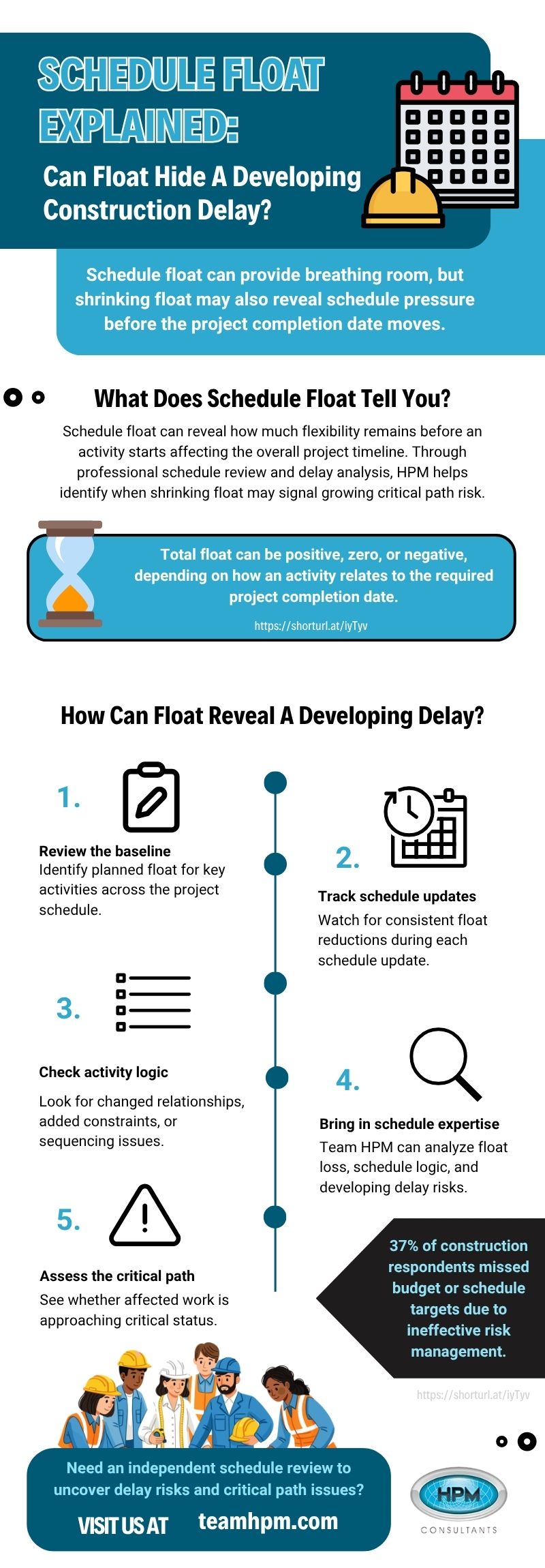


Schedule float is an important indicator of how much flexibility remains in a construction schedule before an activity begins to affect the overall project completion date.
While available float can provide valuable breathing room, shrinking float may also be an early warning sign of developing schedule pressure—even when the contractual completion date has not yet moved.
What Does Schedule Float Tell You?
Schedule float shows how much flexibility an activity has before it starts affecting the project timeline. Through regular schedule reviews and delay analysis, project teams can monitor changes in float and identify when activities may be moving toward critical status.
Total float can be positive, zero, or negative, depending on how an activity’s forecast completion relates to the required project completion date.
How Can Float Reveal a Developing Delay?
1. Review the Baseline
Identify the planned float for key activities and understand where schedule flexibility was originally available.
2. Track Schedule Updates
Compare successive schedule updates and watch for consistent reductions in float. A gradual loss of float can indicate increasing schedule pressure.
3. Check Activity Logic
Review changes to relationships, constraints, sequencing, and dependencies. Changes in schedule logic can significantly affect available float.
4. Bring in Schedule Expertise
A detailed schedule analysis can help identify the causes of float loss, changes in schedule logic, and potential developing delay risks.
5. Assess the Critical Path
Determine whether activities experiencing float loss are approaching critical status and whether their continued slippage could affect project completion.
Why Does This Matter?
A project can remain on its original completion date while its available float is steadily decreasing. That means the absence of a visible completion-date delay does not necessarily mean the schedule is healthy.
Monitoring float trends gives project teams an opportunity to identify emerging schedule risks before they become critical.
Need an Independent Schedule Review?
An independent schedule review can help uncover delay risks, critical path issues, float erosion, and schedule logic concerns before they develop into larger project problems.
Team HPM Consultants
Visit: teamhpm.com