
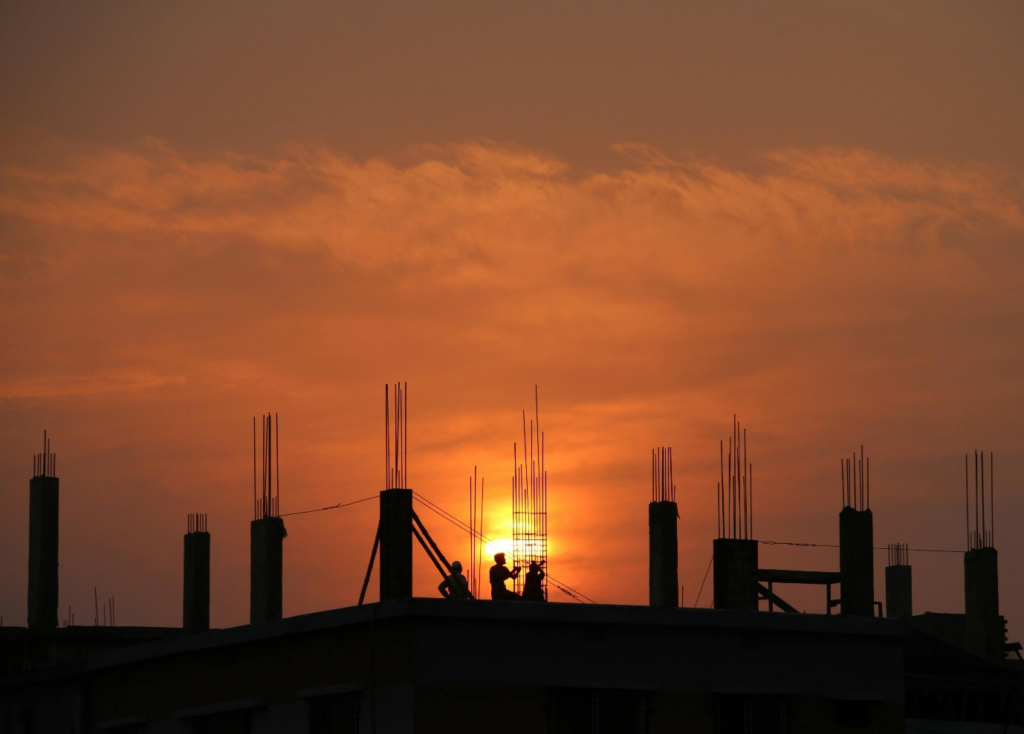

Storms, shortages, and shutdowns do not ask permission. They can still decide who pays for a late project.
Whether force majeure delays excuse a contractor depends on the contract language and the proof behind the claim.
What force majeure means
A force majeure clause excuses or suspends performance when events outside a party’s control interfere. Each contract lists its own events, and some lists are narrow.
Courts generally apply force majeure delays language as written, so the exact wording matters.
Weather
Documentation matters most. Daily reports should record rain days, wind events, and the work that could not proceed.
Normal weather is usually a planned risk. Contractors are expected to allow for typical conditions for the season and place.
Unusually severe weather can qualify for more time, but the contractor still has to compare actual conditions with historical records from sources like the National Weather Service.
Supply chain disruption
Material shortages and long lead times became common in recent years, and force majeure delays claims followed. Many contracts do not clearly say who carries the risk.
A contractor claiming a supply delay should show when the item was ordered, what the promised delivery date was, and what alternatives were tried.
COVID-19 and other health events
Pandemic-related delays followed the same logic. Government orders, site closures, and labor shortages were each tested against the clause.
Even where an event qualifies, the delay must still have affected the critical path to justify more time.
Excusable versus compensable delay
An excusable delay gives more time but not more money. A compensable delay gives both.
A construction delay expert can tell which type an event is by reading the clause against the facts.
External events are usually excusable only. Owners who see a request for added cost should check whether the contract allows it.
How experts prove causation
Proving a link between an event and a late finish takes more than a calendar entry. A construction delay analysis shows which activities were hit and whether they controlled completion.
The analyst compares the event dates with the schedule updates and daily reports. This separates real impact from delay that would have happened anyway.
A construction delay claims file is far stronger when each external event is documented as it happens.
Experts also test concurrent causes. If poor planning overlapped with a storm, the contractor may not recover for the whole period.
A construction delay impact analysis puts days and dollars to each event, so the dispute turns on facts rather than opinion.
What to keep on file
- Dated notices of each event
- Weather logs and supplier letters
- Purchase orders and delivery confirmations
- Schedule updates before and after the event
Wildfire smoke, heat, and permitting backlogs add to the mix in Los Angeles.
A construction delay impact analysis in Los Angeles, CA, should account for each of them.
Local timelines matter when the claim rests on how long an approval normally takes.
Teams facing construction delay claims in Los Angeles, CA, should collect those records now.
Know your position with HPM Consultants
At HPM Consultants, we analyze how force majeure delays affect schedule and cost. Our team separates external events from controllable ones.
Contact us to review the causes of your project delay.