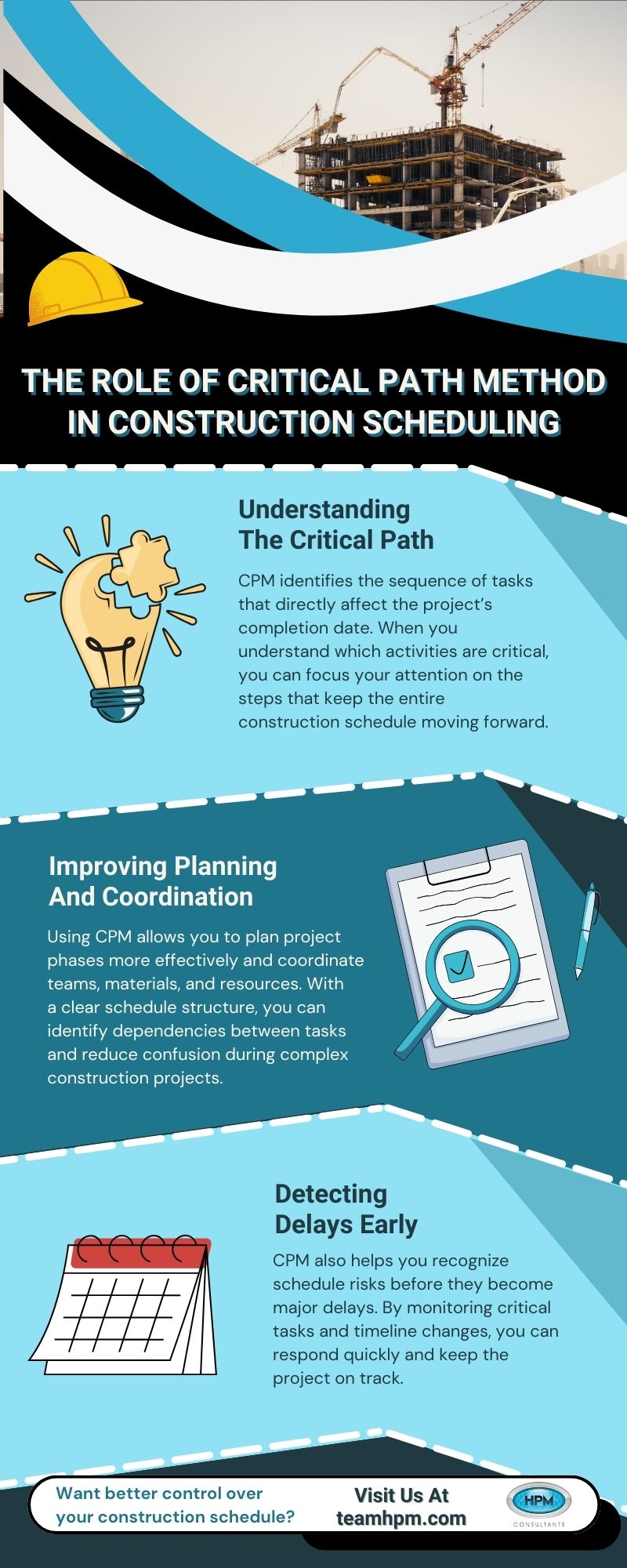


Effective construction project management relies heavily on proper planning, coordination, and timely execution. One of the most valuable tools in achieving this is the Critical Path Method (CPM), which plays a key role in ensuring projects are completed efficiently and on schedule.
Understanding the Critical Path
The Critical Path Method helps identify the sequence of tasks that directly impact the overall project timeline. By determining which activities are critical, project managers can focus on the tasks that must be completed on time to avoid delays. This clarity ensures that the entire construction schedule continues to move forward without unnecessary interruptions.
Improving Planning and Coordination
CPM enhances project planning by providing a clear structure of all tasks and their dependencies. It allows teams to better coordinate resources, materials, and manpower. With improved visibility into how each task is connected, project managers can minimize confusion, streamline workflows, and maintain alignment across all phases of construction.
Detecting Delays Early
Another major advantage of CPM is its ability to identify potential delays before they become serious issues. By continuously monitoring critical activities and timeline changes, teams can take proactive measures to address risks. This helps keep the project on track and reduces the likelihood of costly disruptions.
Conclusion
The Critical Path Method is an essential strategy for maintaining control over construction schedules. By improving visibility, coordination, and risk management, CPM enables project teams to deliver projects on time and with greater efficiency.