
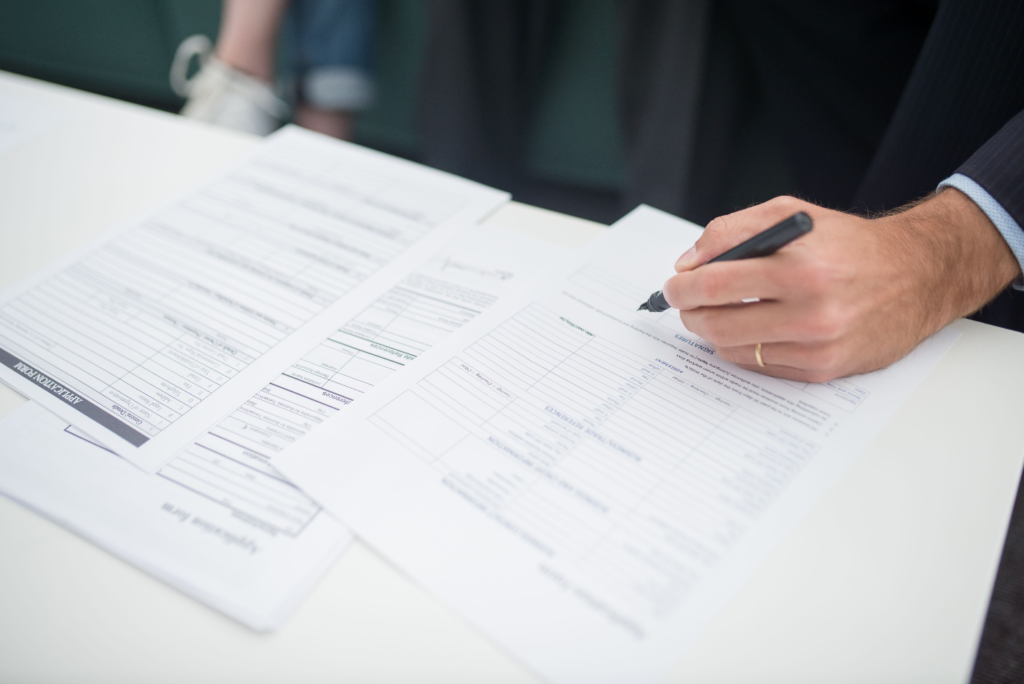

Most delay claims are not lost because the delay was not real. They are lost because delay claim documentation was too thin to survive scrutiny. A tribunal cannot compensate for a story it cannot verify, no matter how legitimate the underlying delay actually was. Contractors who understand this early tend to build stronger positions long before a dispute ever becomes formal, since the habits that protect a claim are established on site, not in a lawyer’s office months later.
The Records That Actually Matter
Not all documentation carries the same weight in a dispute. Daily reports, schedule updates, correspondence, and meeting minutes created at the time of the event carry far more credibility than a narrative pieced together after the fact. Contemporaneous records are difficult to challenge because they were not written with litigation in mind.
A daily report noting a late delivery, written the same afternoon it happened, carries weight that no amount of later testimony can replicate. That gap between real-time and reconstructed evidence is exactly where weak claims tend to fall apart.
Why Weak Documentation Sinks Otherwise Valid Claims
A contractor can experience a completely legitimate delay and still lose the claim if the paper trail cannot support it. Construction delay claims fail more often from missing records than from weak facts, since a tribunal has no way to verify an event it cannot see documented somewhere in the project file.
The Burden Falls on the Party Making the Claim
Every delay claim carries a burden of proof, and that burden does not shift just because the delay seems obvious in hindsight. The contractor bringing the claim has to show, through the record, when the event occurred, how it affected the schedule, and why responsibility falls where they say it does.
Where Expert Review Becomes Necessary
When documentation is thin, a construction claims expert witness can sometimes reconstruct parts of the timeline using secondary records, but reconstruction is never as strong as evidence gathered in real time. A delay damages expert witness faces the same limitation when trying to connect costs to a poorly documented delay period. Both roles work considerably faster and produce more defensible conclusions when the underlying project file is complete from the start.
Building the Habit Before You Need It
The contractors who fare best in a dispute are rarely the ones who scrambled to assemble records once a claim became necessary. They are the ones who treated documentation as a routine part of running the job, long before anyone suspected a dispute was coming. That habit costs very little day-to-day and pays off enormously the one time it actually matters.
A Regional Pattern Worth Noting
Firms handling Los Angeles construction delay claims consistently report that the strongest claims come from contractors who treated documentation as routine, not as an afterthought reserved for disputes. A construction claims expert witness can often tell within the first review how well a claim will hold up, simply by looking at the quality of the records available.
Strengthen Your Delay Claim Documentation with HPM Consultants

At HPM Consultants, we help contractors build delay claim documentation that can withstand real scrutiny, not just documentation that looks complete on the surface.
Contact us to review your project records and strengthen your position before a delay dispute puts your documentation to the test.